What AUVO certification and licensing mean for your practice
Many people who look into touch therapy certification already know how much touch can help. What holds them back is usually a quieter question: can I really do this well, and can I do it safely? Certification is not only a piece of paper. It is a clear answer to that question, for you and for your clients.
Why touch work feels hard to start
Touch is one of the most natural things we have, yet offering it professionally can feel risky. Many body-based trainings teach a wide range of techniques and expect you to choose the right one for each person, often by intuition. That takes years. It also leaves you with a lot of open questions. Where should I touch? How firm? What if a client feels uncomfortable?
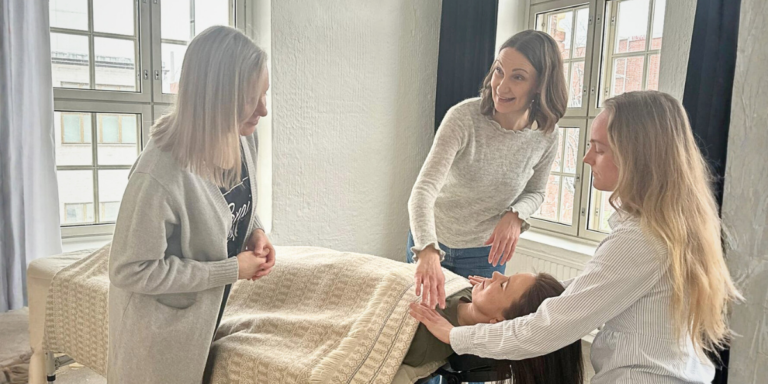
AUVO answers these questions before you meet your first client. Each AUVO treatment follows a fixed structure, with the same sequence every time. Safety and trauma sensitivity are part of that structure. So the hardest part of touch work has already been done, and your job is to give the treatment the way you learned it.
Your clients can trust that an AUVO treatment is the same, whoever gives it.
Why the same treatment everywhere matters
A Coca-Cola tastes the same in Helsinki, Lisbon or Tokyo. You do not have to wonder what you will get. AUVO works in a similar way. A client who has enjoyed AUVO Balance with one practitioner can book it with another and know what to expect.
This matters more than it first seems. When a new practitioner starts out, they usually have to build trust from zero, one client at a time. With AUVO, part of that trust comes with the method. When your client tells a friend about the treatment, the friend is not only hearing about you. They are hearing about a treatment that thousands of people have already received in the same form.
It also protects you. You do not have to invent your own approach or prove that it works. You can rely on a method that has been developed and tested for decades.
What touch therapy certification says about you
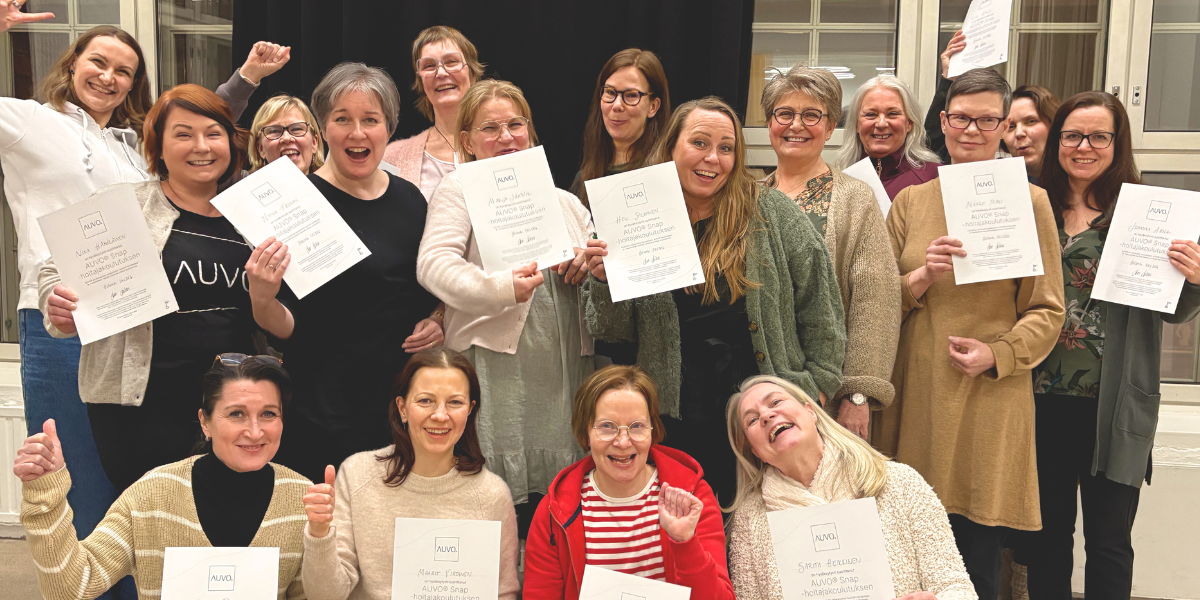
Every AUVO practitioner training ends with certification and a diploma. It shows that you have learned the treatment as it is taught, and that you are ready to give it in your own practice.
For clients, this is a simple signal they can trust. They do not have to judge your skills on their own. The same goes for partners you may work with, such as a spa, a clinic or a company that wants treatments for its staff.
You can start with AUVO Snap, the shortest treatment, and add AUVO Balance or AUVO Deep later. Many practitioners do, but there is no required path.
When a licence comes in
AUVO Balance and AUVO Deep practitioners work under a licence. The licence gives you the right to offer these treatments under the AUVO® name. It is also what keeps that name meaningful: when clients see it, they can trust that the treatment follows the method. Licensed practitioners can also join an international practitioner community for support and shared learning.
AUVO Snap does not require a licence. You can offer it in your own practice once you are certified.
Clear limits make you more trustworthy
Certification shows that you have learned the method. It does not mean every client will feel the same after a session. People arrive with different levels of stress and fatigue, and the body responds in its own time. AUVO is a research-based method that supports relaxation and recovery. It does not replace other care.
Being clear about this is a strength. When a new client asks what will happen, you can tell them exactly: how long the treatment takes, that it always follows the same structure, and that they keep their clothes on. For someone who feels unsure about touch, that kind of clarity is often what makes it possible to say yes.
See which AUVO training fits your practice.