Inside AUVO Practitioner Training: Skills, Practice Path, and the Support of an International Community
AUVO Practitioner Training is a structured learning journey designed for wellbeing and health professionals who want to offer a touch-based method that supports calming, presence, and nervous system balance in a clear and respectful way. At Auvo Academy, the training is built to be realistic about commitment: you learn principles, practice under supervision, receive feedback, and stay connected to an international community that continues to support your development long after the first training days.
In this article, you’ll get an inside look at what the path typically involves; what you learn, how you practice safely, how progress is assessed, and what kinds of support help you turn skills into a sustainable practitioner craft. If you’re considering training, this overview aims to help you decide with clarity and calm expectations.
What you learn in AUVO Practitioner Training: principles first
The starting point of AUVO Practitioner Training is not “perfect technique,” but an understanding of what the AUVO® method is trying to create: a safe and grounded encounter that can support downshifting from stress. The method combines therapeutic touch, music, and presence. Trainees learn to hold a respectful frame, to work consistently, and to avoid over-promising. In practice, this means learning how to meet different people with care, without turning the session into analysis or asking clients to share personal stories.
Auvo Academy’s approach emphasizes structure. Many prospective trainees appreciate that the learning process is clearly scaffolded: foundational principles are repeated and practiced, not just explained once. You’ll return to the “why” behind the method – why clarity and predictability matter for a stressed nervous system, and why professional boundaries are part of safety. If you want a deeper overview of the method’s core idea, you can also read AUVO Method before applying.
Core learning themes you’ll revisit throughout training These topics show up repeatedly in theory sessions, demonstrations, and your own practice rounds.
Safety and consent How to communicate touch-based work clearly, respectfully, and without pressure.
Presence as a skill How your pace, attention, and steadiness can support calm without forcing results.
Clear session structure Learning a method you can repeat reliably with different people and contexts.
Professional scope How to position AUVO® work as supportive wellbeing practice, not a replacement for medical or mental health care.
Because the method is touch-based, practical ethics matter. You learn how to create a respectful atmosphere, how to check in, and how to keep the experience simple for the receiver. For many trainees, this clarity is one of the most reassuring aspects: you don’t need to “perform,” you need to practice consistency.
Supervised practice and feedback loops in AUVO Practitioner Training
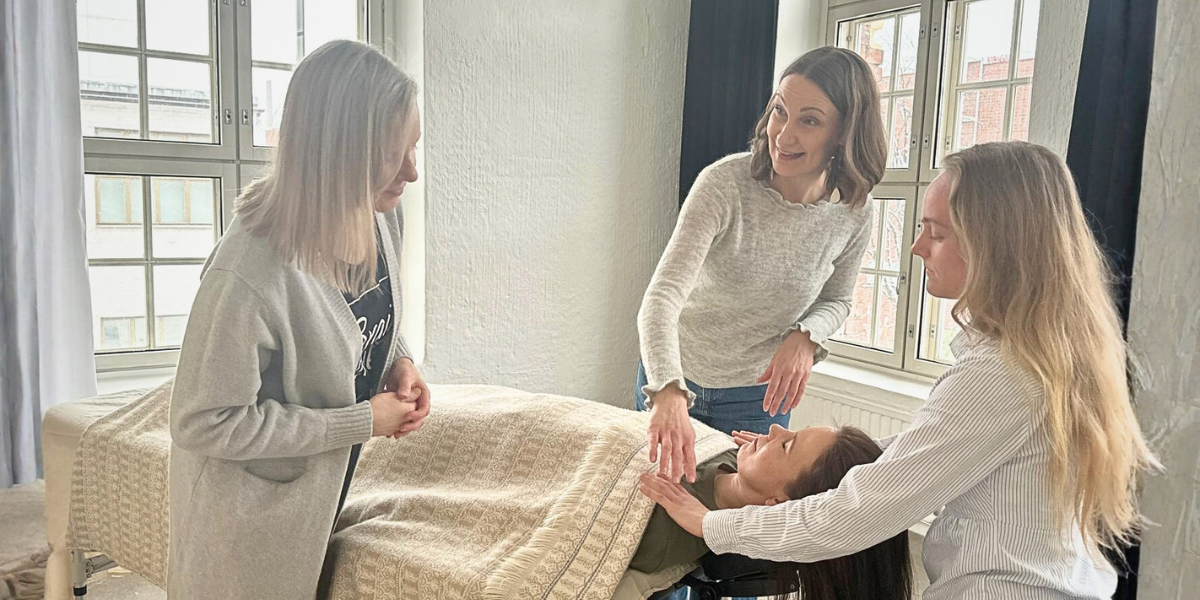
A key difference between watching a method and embodying it is supervised repetition. In AUVO Practitioner Training, you practice in guided rounds, receive feedback, and then practice again, so your learning is not left to guesswork. Feedback is typically oriented toward what is observable and trainable: pacing, clarity, professional communication, and the ability to follow the method consistently.
Supervision also supports confidence. Many practitioners-in-training worry about “doing harm” or “getting it wrong.” A structured environment helps you calibrate: what is within the method, what is outside it, and when it’s appropriate to refer a client onward. If you’re new to offering touch-based wellbeing services, this is where professional steadiness is built – through small corrections, repetition, and realistic reflection rather than dramatic breakthroughs.
Another part of the learning loop is learning how to receive feedback. Training isn’t only about the receiver’s experience; it’s also about developing your practitioner mindset: staying curious, being willing to adjust, and learning to separate your self-worth from a single practice round. That makes your future work more sustainable, especially when you meet clients who are tired, skeptical, or simply having a difficult week.
From training room to real sessions: a realistic practice path
After the initial learning phases, most trainees ask the same question: “How do I translate this into real sessions?” The path is intentionally gradual. You build fluency by practicing with real people in appropriate settings, while keeping the method’s frame clear and consistent. You learn to manage the practical details like timekeeping, session flow and communication so that the work remains calm and predictable for clients.
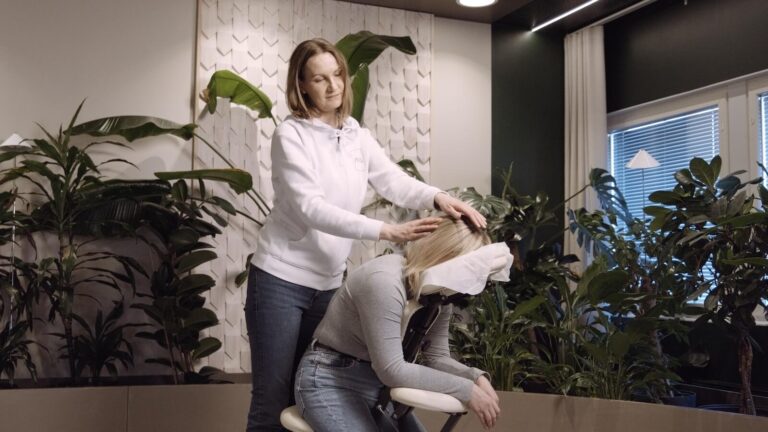
It also helps to understand AUVO® services at a realistic level. For example, AUVO® Snap is a short, five-minute touch-based treatment designed for busy everyday contexts and events. It aims to offer a brief moment of pausing that may support calming, recovery, and presence, without a long treatment or personal processing. AUVO® Balance and AUVO® Deep are longer sessions that allow more time for settling and deep restfulness, but the practitioner’s role is still to offer a structured method rather than promise a cure.
What “commitment” often looks like between modules Many trainees benefit from planning time and energy for these practical steps.
Regular practice sessions Repeating the method with several people to build steadiness and reduce performance pressure.
Reflective notes Tracking what stayed consistent, what drifted, and what you want to ask in supervision.
Communication practice Learning to describe what you offer in plain language, including boundaries and consent.
Client suitability thinking Knowing when AUVO® may be supportive and when another professional is the better next step.
If you want to explore how longer AUVO sessions are described, Auvo Treatments offers a grounded overview. Reading it early can help you align your expectations with the way Auvo Academy positions the work: supportive, calm, and structured.
Assessment, certification, and what “ready” means
Prospective trainees often wonder whether there is a “test” at the end. In a method like AUVO®, readiness is less about a single performance and more about consistent delivery: can you follow the method, maintain a calm pace, communicate clearly, and hold boundaries? Certification and licensing exist to protect quality for clients and to support the reputation of practitioners across countries.
It’s also worth acknowledging that learning touch-based work is physical and relational. Some people learn quickly; others need more repetition to feel steady. A realistic training culture makes room for both. The goal is not to rush you into offering sessions before you feel grounded, but to help you build a repeatable standard that you can rely on when you’re tired, busy, or meeting a new client for the first time.
Ongoing support: the international community after AUVO Practitioner Training
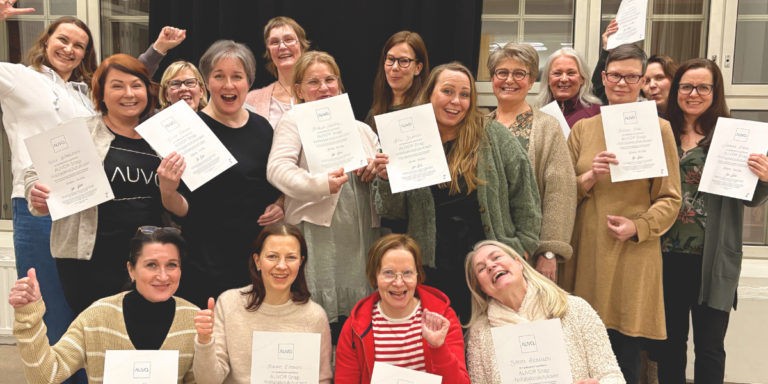
One of the most practical benefits of AUVO Practitioner Training is what happens after the initial training: continuing support, peer connection, and shared standards across countries. Many practitioners do not need more “content”; they need a place to refine real-world questions. Community spaces can help you troubleshoot the everyday realities of practice; how to explain your service, how to maintain boundaries, and how to keep your work consistent when your calendar fills up.
The international aspect is not only inspiring; it’s also stabilizing. When practitioners from different countries share a common method language, it becomes easier to maintain quality and avoid drifting into personal “add-ons” that confuse clients. That shared structure can be especially helpful if you offer AUVO® sessions alongside other modalities: you can keep AUVO® clear and recognizable while still being fully yourself as a practitioner.
Ongoing learning also includes keeping your professional positioning honest. AUVO Academy encourages practitioners to speak about benefits in measured terms: sessions may support calming, recovery, and presence, but they do not replace medical care or mental health treatment. This kind of realism is part of what makes the community feel safe, both for clients and for practitioners.
Is AUVO Practitioner Training a fit for you? Practical decision criteria
Not everyone needs another training and it’s wise to evaluate fit carefully. AUVO Practitioner Training tends to suit professionals who value structure, repetition, and a calm, client-respecting approach. If you are looking for a method with clear boundaries, supportive supervision, and an international framework, this path can be a strong match. If you want a highly improvisational style where each session is reinvented, you may find the AUVO® approach intentionally more consistent.
It’s also helpful to reflect on your context. Some trainees plan to integrate AUVO® into an existing practice; others want a new professional direction. Either way, you’ll want enough time in your schedule for practice rounds and reflection. You can also explore practitioner perspectives via AUVO Practitioners to see how different backgrounds bring the method into real life.
If you feel drawn to the method, a calm next step is to download the official training brochure, and maybe talk with the AUVO team. A well-chosen training should leave you feeling both inspired and grounded – clear about the commitment, clear about the boundaries, and supported by a community that values quality over hype.
Auvo Academy builds AUVO® training and licensing with that long view in mind: steady skill-building, supervised practice, and continuing support so that your work can remain respectful, safe, and sustainable.
Considering AUVO training for your practice?
Explore the training path, locations, and next dates, and ask anything you need to plan your practice and learning time realistically.