
From “Always On” to Regulated: A Practical Guide to Nervous System-Friendly Recovery Between Meetings
If your workday feels like it never truly pauses, nervous system-friendly recovery between meetings can be the difference between “getting through” and actually staying well. The goal isn’t to become perfectly calm or to force your mind to be quiet. It’s to offer your body a few clear, repeatable cues of safety—so you can downshift in small doses, again and again, without needing a full break that never comes.
In this guide, you’ll find a practical micro-recovery routine you can use in real life: between calls, before a difficult conversation, after a tense email thread, or whenever you notice that you’re running on adrenaline. We’ll use three gentle levers that tend to work even when motivation is low: touch principles (simple, respectful, self-applied options), breath pacing (not breath-holding or forcing), and music as a cue for safety. And if “doing it yourself” rarely sticks, we’ll also explain how AUVO®—developed by Auvo Academy Oy—offers a structured option for people who struggle to truly downshift.
Why “Always On” Happens (and What Nervous System-Friendly Recovery Really Means)
Many people assume the problem is a lack of discipline: “I should relax more.” But a busy day often creates rapid context switches—one meeting to the next, one role to the next—without a clear end signal. Your nervous system may interpret this as ongoing demand. Even if nothing is “wrong,” the body can stay in a mobilized state: alert, braced, scanning, ready.
Nervous system-friendly recovery between meetings is not about eliminating stress. It’s about inserting small, regulation-supportive moments that are realistic inside a workday. Think of them as micro-transitions: brief rituals that help your body register, “This segment is ending; another is beginning; I’m still safe.” Over time, these micro-recoveries can reduce the sense of emotional whiplash that comes from being continually “on.”
Signs you might benefit from micro-recovery These are common, everyday cues—not diagnoses.
- Fast start, slow stop You can “perform” instantly, but you struggle to come down afterwards.
- Shallow breathing under pressure Your breath gets tight or high in the chest during back-to-back calls
- Persistent “background tension” Jaw, shoulders, belly, or hands stay subtly contracted
- Difficulty switching roles You carry one meeting’s intensity into the next conversation
- Evening crash You feel wired all day, then suddenly depleted when work ends.
To ground the approach in evidence-informed thinking: slow, controlled breathing can influence autonomic state, and music is widely used to support relaxation and emotion regulation.
A Step-by-Step Routine for Nervous System-Friendly Recovery Between Meetings (3–5 Minutes)
This routine is intentionally small. The point is not to create a perfect practice—it’s to create a repeatable pattern. If you have five minutes, do all steps. If you have two minutes, do the first two. Consistency beats intensity.
Step 1: End the previous meeting on purpose (10–20 seconds).
Close one loop before opening the next. You might gently label the ending: “That’s done.” If you take notes, write one line: next action or next contact. Your nervous system often relaxes when it senses completion.
Step 2: Add gentle touch principles (30–60 seconds).
Choose a form of self-touch that feels respectful and neutral—no forcing, no “fixing.” The intention is to communicate steadiness. Examples include resting one hand over the other, placing a palm on the forearm, or lightly holding your own hands. Keep pressure soft.
Step 3: Pace your breath (60–90 seconds). Keep breathing easy, not dramatic. A simple pacing option is to let the exhale be slightly longer than the inhale (for example, inhale for a comfortable count and exhale for one or two counts longer). If counting feels stressful, simply breathe as if you’re quietly fogging a mirror on the exhale—soft, unforced.
Step 4: Use music as a cue for safety (60–120 seconds). Pick a short, consistent sound cue: one track, one instrumental piece, or even a 30–60 second segment. The point is repetition. When your nervous system hears the same cue repeatedly during downshifts, the cue becomes easier to trust. Keep the volume low and the choice predictable—this is not stimulation; it’s orientation and settling.
Gentle Touch, Breath, and Music: How to Make the Routine Feel Safe (Not Like Another Task)
Micro-recovery often fails when it becomes one more performance metric: “Did I do it right?” A nervous system-friendly approach stays oriented toward permission rather than pressure. If you notice frustration, that’s information—not failure. So we design the routine to be “low-demand.”
Here are a few principles that help touch, breath pacing, and music remain supportive rather than activating. They’re especially useful for high performers who can “push through” anything—except rest.
- Make it feel safe Small adjustments can change the whole experience.
- Choose neutrality over intensity Gentle, neutral touch is often more settling than “deep pressure.”
- Keep breath comfortable If you feel air hunger, lighten the pacing immediately.
- Use the same music cue for weeks Familiarity is often more regulating than novelty.
- Micro is the point Stop while it still feels easy—leave your nervous system wanting more, not bracing.
- Track one felt sense Instead of “am I calm,” notice one signal: jaw softness, warmer hands, slower thoughts.
It can help to anchor your learning with a clear framework. If you’d like to understand how AUVO® approaches regulation through touch, music, and presence, explore the overview of the method here: AUVO Method. You can also browse more topics and reflections in the Articles library.
Short notice
If you want a simple way to remember your routine, AUVO Cards can help you keep cues visible—without turning recovery into another productivity system.
Explore AUVO Cards for nervous system-friendly recovery between meetings
When Self-Guided Breaks Don’t Work: AUVO® as a Structured Option
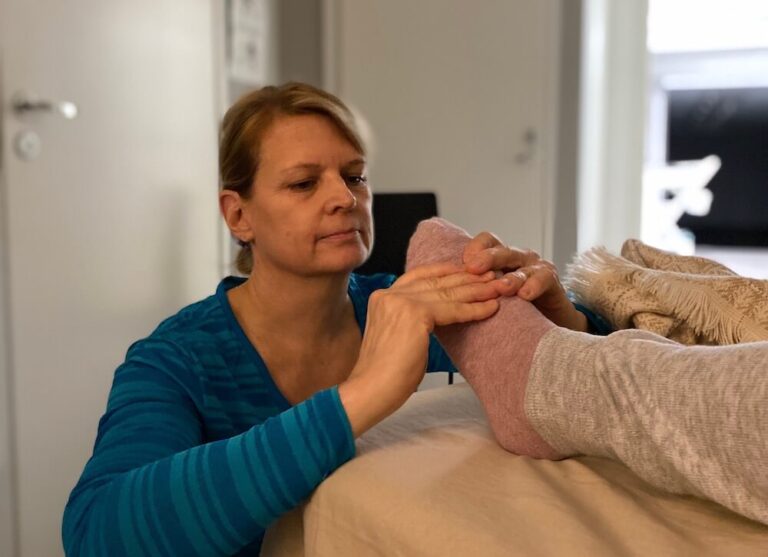
Sometimes the barrier isn’t knowledge—you already know you “should take breaks.” The barrier is that your system doesn’t easily accept rest when you’re alone, especially after years of overriding fatigue. In those moments, structure and co-regulation can matter. This is one reason touch-based wellbeing methods can feel different: for many people, safe, respectful touch is a clear cue that it’s allowed to soften.
We at Auvo Academy have developed the AUVO® method, combining therapeutic touch, music, and presence to support nervous system settling and stress relief. AUVO® is also taught through training and licensing, supporting practitioners and organizations in creating consistent, respectful experiences—without requiring participants to share personal stories or “explain” their stress.
Here is a practical orientation to the AUVO® service options, described at a safe, foundational level:
| Option | Typical time | Best fit |
|---|---|---|
| AUVO® Snap | About 5 minutes | A brief, touch-based treatment designed for busy days, workplaces, teams, or events—supporting a quick pause and return to presence. |
| AUVO® Balance | About 25 minutes | A core treatment format for deeper settling and nervous system balance when you want more time to downshift. |
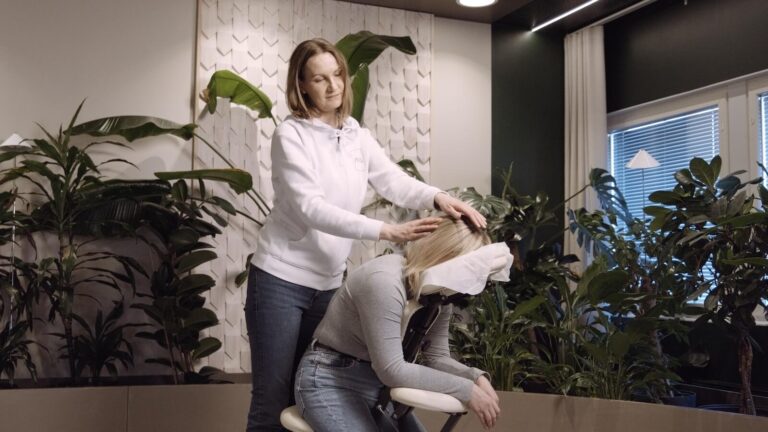
| AUVO® Deep | About 50 minutes | When stress symptoms feel stronger or you’re seeking more thorough recovery with a longer full-body sequence. |
If you’re curious about finding a qualified provider, you can start with AUVO Practitioners. For workplaces exploring a respectful, low-threshold way to support people during intense periods, AUVO® Snap can be a simple entry point because it is short, structured, and touch-based—designed for the pace of real life.
How to Build a Workday Rhythm: A Simple “Regulated” Meeting-to-Meeting Plan
A routine works best when it’s attached to existing transitions. Instead of relying on willpower, assign your micro-recovery to moments that already happen: when a call ends, when you stand up, when you press “join,” when you close your laptop. You’re building a rhythm your body can predict.
Try this gentle plan for one week and keep it modest. You’re not trying to overhaul your schedule—you’re teaching your nervous system that pauses are real and repeatable.
A realistic day plan Choose what fits; keep it kind and doable.
- Morning setup (1 minute) Pick today’s music cue and decide your “end of meeting” phrase.
- Between meetings (2–3 minutes) Do Step 1 + Step 3; add gentle self-touch if it feels supportive
- Before a hard conversation (60 seconds) One longer exhale cycle plus your music cue to signal steadiness.
- Midday anchor (5 minutes) If available, choose a fuller reset—walk, quiet room, or a scheduled wellbeing support.
- Day closure (2 minutes) Repeat the same music cue and write one “done list” item to mark completion.
If you’re part of an organization and want a structured, teachable approach—not just another wellbeing tip—Auvo Academy also works B2B with teams and partners. The emphasis stays practical: short formats, respectful delivery, and a method that supports settling without demanding personal disclosure.
For Professionals: Training Pathways When You Want to Offer Nervous System-Friendly Recovery Between Meetings to Others
If you’re a coach, therapist, bodyworker, or wellbeing professional, you may notice a common theme: many clients understand stress intellectually, yet still struggle to downshift in everyday life. Having a clear method and a shared vocabulary can make support more consistent—especially when working with groups or within organizations.
Auvo Academy provides education, certification, and licensing around the AUVO® method, building a community of practitioners and trainers across Europe. If you’re exploring a professional pathway, you can start with an overview at AUVO Practitioner Training.
Whether you pursue training or simply adopt the micro-routine in this article, keep the tone gentle. Regulation grows through repetition, trust, and respectful pacing. The workday may stay busy—but your nervous system can learn that it is not required to stay in “always on” mode all day long.
If you’d like to talk with the AUVO team about collaborations, trainings, or structured options for your workplace, you can reach us via the site’s contact page or by phone (+358 45 124 2373).