AUVO® Snap: A Calm, 5‑Minute Reset for Busy Teams (and Why It Feels Safe)
AUVO® Snap is a calm, chair-based 5‑minute reset designed for real workdays—between meetings, after a tense call, or when focus starts to fragment. In busy, performance-focused environments, it can feel surprisingly safe because it uses clear structure, explicit consent, and steady presence rather than big promises or emotional pressure.
Auvo Academy develops the AUVO® method by combining therapeutic touch, music, and presence to support nervous system settling. AUVO® Snap is the shortest format in that ecosystem—simple enough to fit into a team day, but deliberate enough to help people downshift without having to “talk about it” or disclose personal stories.
What “AUVO® Snap” looks like in practice
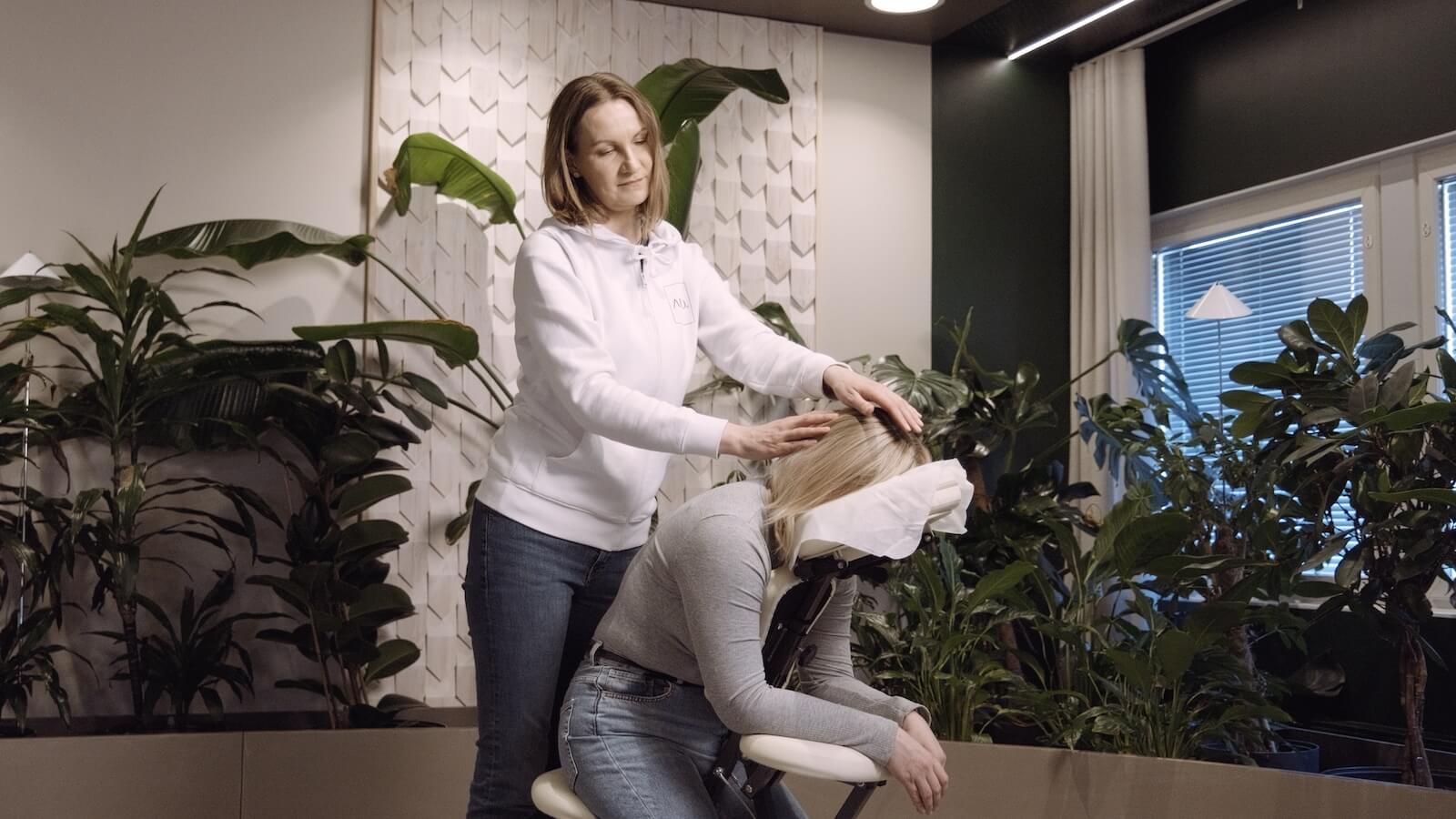
In practical terms, AUVO® Snap happens with the participant seated at a desk chair or meeting-room chair. The idea is not to chase a dramatic breakthrough; it’s to offer a brief, predictable sequence that helps the body register: “Nothing is demanded of me right now.” For HR and team leads, that predictability matters—especially when you’re introducing wellbeing support to people with different comfort levels around touch and relaxation practices.
Because AUVO® Snap is designed for workplaces and teams, it often happens in a semi-open context (a quiet corner, wellness room, or meeting room). That can sound counterintuitive—many people assume privacy is required. In reality, what often matters more is psychological safety: clear boundaries, respectful pacing, and not being put on the spot.
To understand how the desk format connects to the broader approach, it can help to read about the foundations of the method on the AUVO Method page.
One reason desk-based work can be so activating is that it keeps attention outward—screens, notifications, and social demands. A short reset shifts attention back toward sensation: contact points with the chair, the floor, and the breath. It’s not about “emptying the mind.” It’s about creating enough internal quiet to regain choice: respond rather than react.
Why AUVO® Snap feels safe in performance-focused cultures
High-performing cultures often have an unspoken rule: keep going. People may worry that if they pause, they’ll look weak—or that a wellbeing activity will turn into something emotionally exposing. AUVO® Snap tends to feel safe because it does not require disclosure, processing, or group sharing. The structure itself communicates: “This is time-bounded, optional, and designed to help you return to function.”
Safety also comes from consent. In touch-based modalities, consent is not a formality—it is part of the intervention. When a participant is asked clearly, given real options, and reminded they can stop at any moment, the body often settles faster. This is aligned with trauma-informed principles: choice, collaboration, and predictable steps.
A five-minute reset doesn’t need to “fix” stress—when it’s clearly bounded and consent-led, it can simply help the nervous system remember what steady feels like.
Presence is the third pillar that often gets overlooked in corporate wellbeing. People can tell when a facilitator is rushing, performing, or trying to “get a result.” A calm practitioner who is attentive and not outcome-driven creates a different signal: you are not being evaluated. That alone can reduce defensive tension and help breathing slow naturally.
Structure + consent + presence: the three anchors behind AUVO® Snap
When teams are busy, a reset must be easy to understand and repeat. That’s where structure helps: the same opening language, the same sequencing, and a consistent close. Repetition is not boring in nervous system work—it’s reassuring. It lets participants anticipate what comes next, which can reduce vigilance and make the experience more accessible for first-timers.
Consent is both verbal and practical. It includes where the session happens (in view of others or behind a door), how the participant is positioned (feet on the floor, hands resting), and what kind of contact is acceptable.
Presence is the anchor that holds structure and consent together. In Auvo Academy’s training culture, presence isn’t treated as a “soft skill” but as a core competency—because it changes how safe a person feels receiving support. If your organization is exploring what this means in real-world practice, you can also browse more perspectives in the Articles section.
How to introduce AUVO® Snap without overpromising
In HR and performance-focused environments, credibility is everything. The fastest way to lose trust is to promise that a five-minute intervention will eliminate burnout, trauma, or chronic stress symptoms. A better approach is to speak in modest, observable terms: “This can help you settle,” “It may support focus,” “It can be a moment of recovery between demands.” Those outcomes are both honest and meaningful.
It also helps to frame AUVO® Snap as one layer in a broader recovery strategy. Some employees will find a brief reset is enough to regain clarity for the next hour. Others may notice that the short format reveals deeper fatigue—useful information, but not something to “solve” in five minutes. In those cases, it can be helpful to point people to longer options like AUVO® Balance or AUVO® Deep, or to other supports in your ecosystem.
| Format | Typical duration | Best fit | What to communicate (no hype) |
|---|---|---|---|
| AUVO® Snap | 5 minutes | Teams, desk work, athletes between efforts | A quick reset to support settling and focus |
| AUVO® Balance | 25 minutes | Deeper nervous system balancing and recovery | More time for downshifting and integration; still structured |
| AUVO® Deep | 50 minutes | Strong stress symptoms or deeper restoration needs | A longer sequence intended for profound rest and reset |
Operationally, launch small. Pilot with a volunteer group, collect qualitative feedback (comfort, clarity, ease of opting out), and refine your communication. If you’re rolling it out broadly, consider a short written “what to expect” that covers boundaries: duration, clothing (normal workwear), touch options, and the right to stop at any time.
What team leads and HR can measure after AUVO® Snap
You don’t need medical claims to evaluate whether a desk reset is valuable. In organizational settings, the most useful indicators are practical and human: do people return to work with steadier attention, less agitation, or improved relational tone? Many teams report that a short pause reduces friction—people interrupt less, speak more clearly, and make fewer impulsive decisions. These are subtle shifts, but over time they can shape culture.
Consider measuring outcomes that respect privacy. Instead of asking employees to describe personal stress histories, ask about the experience of the session: Was the structure clear? Did you feel in control? Did you feel comfortable saying no? Would you do it again? These questions also reinforce the safety message: consent and clarity are central.
Ultimately, AUVO® Snap is valuable because it respects the realities of work: time constraints, diverse comfort levels, and the need for professional boundaries. When a reset is clearly structured and delivered with calm presence, “safe” stops being a slogan—and becomes something people can feel in their body in five minutes or less.
Auvo Academy works with individuals, practitioners, and organizations in Finland, Sweden, Denmark and Hungary. Whether you’re considering a pilot for your team or a broader wellbeing partnership, start with the basics: structure, consent, and presence. Those are the elements that scale—without exaggeration, without pressure, and with genuine respect for the nervous system.
Want a calm reset format that fits real workdays?
Explore how AUVO® Snap can support focus and steadier teamwork without overpromising—through structure, consent, and calm presence.