Can calming touch help when stress keeps you awake?
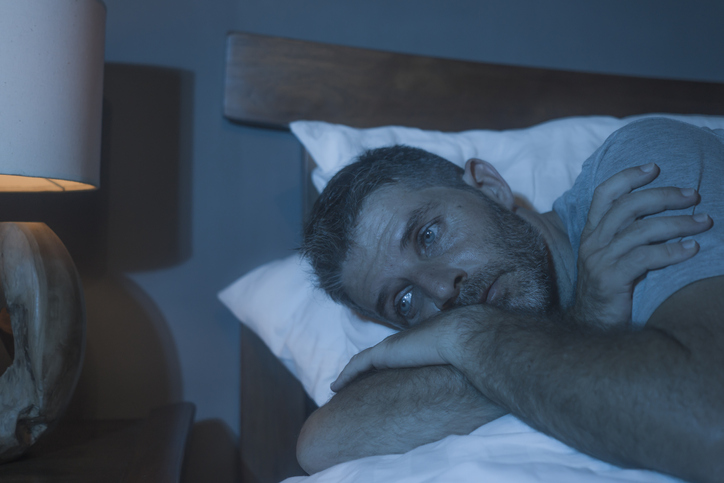
You know the feeling. Your body is tired, but your mind will not switch off. Or you fall asleep fine, then wake up at 4 a.m. and your head is instantly full of everything you still need to do.
I know both very well. For years I called myself a bad sleeper. I blamed my genes, the noise outside, the years of waking up to small children. I even blamed my partner for waking me up, although most nights he was sleeping peacefully and had done nothing wrong.
It took me a long time to see the real reason. My body was on alert all the time. Stress had settled so deep into my system that it followed me into bed every night.
Why stress keeps you awake
When you are under stress, your body switches into fight-or-flight mode. Stress hormones such as adrenaline and cortisol make your heart beat faster and keep your mind alert. This is useful when you need to act quickly. It is not useful at 11 p.m.
Cortisol normally follows a daily rhythm. It is high in the morning and goes down towards the evening, which helps you fall asleep. Long-term stress can keep it high, so your body never gets the signal that the day is over.
The result is familiar to many of us:
- it is hard to fall asleep
- you wake up during the night
- you wake up too early and cannot get back to sleep
- you wake up tired, even after a full night in bed
Poor sleep then makes your nervous system even more sensitive the next day. Stress and sleep start to feed each other.
When you cannot relax on your own
Many people try yoga, breathing exercises or meditation. These are good tools. But when you are very stressed, they may not be enough. You lie down to relax, and your body simply does not follow.
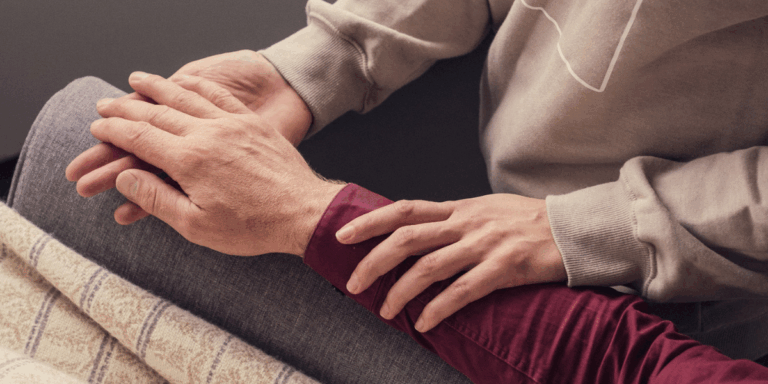
This is not a lack of willpower. A nervous system that has been on alert for a long time can forget what rest feels like. At that point, help from another person can do what you cannot do alone. One of the strongest forms of that help is calm, safe touch.
Calming touch activates the parasympathetic nervous system, the part that slows your heart rate and deepens your breathing. It tells your body that it is safe to let go. Touch also supports the release of oxytocin, which strengthens the feeling of safety, and it can lower cortisol.
You do not need to think, talk or try. Your body gets a clear message: it is time to rest.
What clients notice, and what their watches show
I am not the only one who has noticed this. Many of our clients track their sleep with a smart watch or ring, and they tell us the data shows the same change: their heart rate goes down and their sleep improves.
It is quite common that during an AUVO Deep treatment, a client’s heart rate drops below their usual resting heart rate from the nights before. Their resting heart rate also often stays lower for the following nights. We see the same in heart rate variability (HRV), which is an honest measure of how loaded and alert your body is.
Research points in the same direction. A 2026 review of 88 studies with 5,524 adults found early evidence that hands-on therapies such as massage may improve both physical and mental wellbeing. The studies used different methods, so they do not prove what one specific treatment does. But they support what our clients feel in their own bodies.
What happens in an AUVO treatment
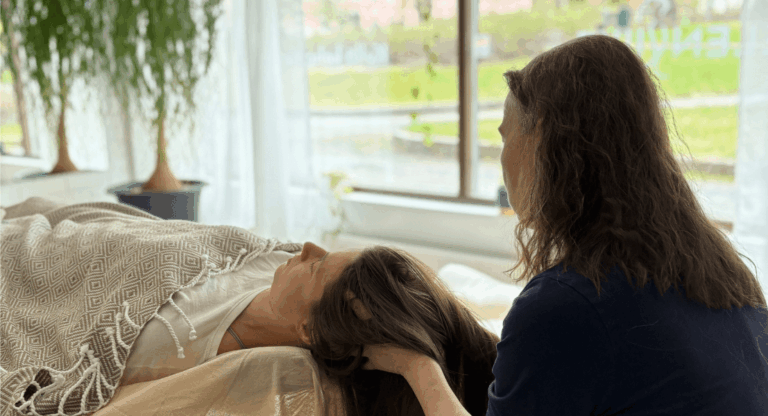
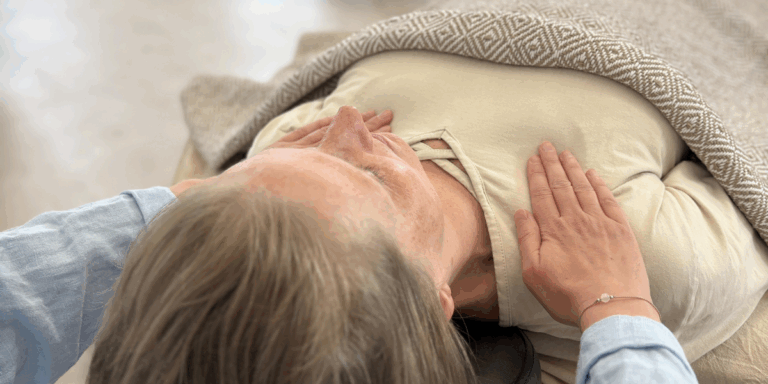
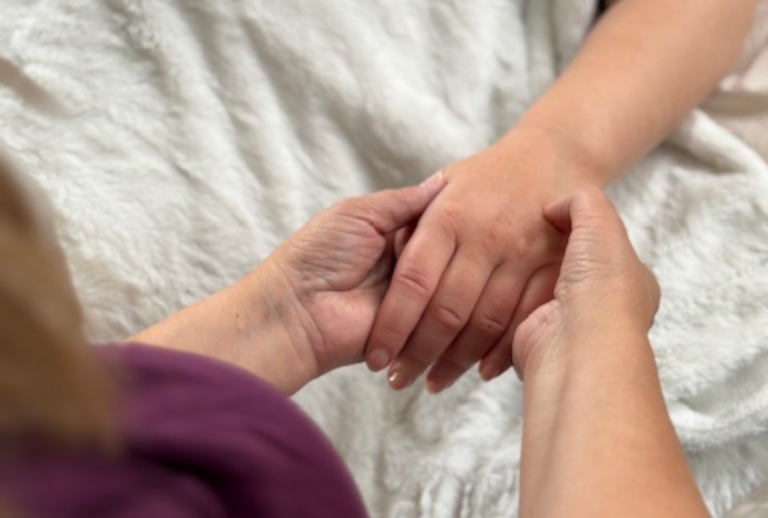
AUVO treatments combine three things: touch, music and presence. The AUVO® Method behind them was developed by Jouko Kivimetsä over more than 30 years. Every treatment follows a fixed structure, and you keep your clothes on. You do not need to explain anything or prepare in any way. You simply receive.
Which treatment fits depends on how much time you have and what you need:
- AUVO® Snap takes about 5 minutes and is done sitting down. It is a quick reset in the middle of a busy day. One client called it “massage for the nervous system”.
- AUVO® Balance (about 25 minutes) gives your body time to slow down properly, but at the same time the treatment is refreshing and activating.
- AUVO® Deep (about 50 minutes) is the longest and deepest treatment. It is often the best choice when stress is already severely affecting your sleep.
It is hard to describe in words what a treatment feels like. Most people understand only after the first time, including those who were sure it would not work for them. You can compare the treatments on our treatments page.
Not a cure, but a real break in the cycle
Stress is only one reason for poor sleep. I will not claim that a treatment solves every sleep problem. If poor sleep goes on for weeks, or you feel exhausted during the day, talk to a doctor. Cognitive behavioural therapy for insomnia is the recommended first treatment for an insomnia disorder.
But if stress is what keeps you awake, your body may need more than another sleep tip. It may need to remember how it feels to be completely at rest. Calm touch is one of the simplest ways to remind it.
Ask yourself: when did your nervous system last get a real chance to rest?
Find an AUVO practitioner near you →
Anna Jalava
Co-founder and Master trainer, Auvo Academy
Sleep coach and workplace wellbeing coach