
When Stress Won’t Let Go: How Touch Supports Deep Recovery
Touch can be a surprisingly powerful tool in supporting recovery from stress – especially when other methods are no longer enough. In this blog, we explore how touch affects the body during times of stress and why it can be such an effective aid in activating the body’s natural recovery processes. Accepting and safe touch helps the body and mind relax and restore balance, even in the midst of prolonged stress.
Vital recovery
Recovery is a widely discussed topic – but what does it actually mean? Simply put, recovery means that the body’s resources are restored to at least their baseline level after strain or stress. When load and recovery are in balance, we have the energy to cope with everyday life and feel well. However, our days are often filled with various demands that burden both body and mind – sometimes without us even realizing it. We often fail to notice how ongoing work pressure, responsibilities at home, and lack of sleep build up invisible strain in our bodies. In such situations, recovery becomes vital.
Recovery is important – in fact, absolutely vital. But what happens if recovery is insufficient? Prolonged lack of proper recovery drains our resources, and over time, the body has to work harder just to keep going. This inevitably leads to problems like fatigue or stress. Unfortunately, many of us live in precisely this state – where recovery is minimal and increasingly difficult to achieve.

All means are valid
Even though there are many sources of strain, the good news is that there are also many ways to recover. The most important of these is, of course, sleep – our body’s natural time for recovery. Sleep plays a central role, but during stressful periods, it's often the first thing to suffer. When the body is overloaded, even a full night’s sleep may not be enough to restore it.
Thankfully, we have other tools to support recovery as well. Nutrition, environment, exercise, breathing, and daily rhythm are all aspects we can influence. While some – like physical fitness – require long-term commitment, others – like conscious breathing – can have a nearly immediate effect on recovery.
Still, there are times when no amount of deep breathing or walking seems to help. That’s when it's important to remember: you don’t always have to manage on your own. Relationships also play a major role in recovery. Close, healthy connections create a sense of safety. In short, when we are in close contact with another person, the body recovers better. The body and mind calm down more effectively when we feel closeness and safety – and when we feel seen and heard.
Sometimes your own means aren´t enough
Even though we have many ways to support the body’s recovery, sometimes they simply aren’t enough. Many people have experienced that moment when their usual coping methods no longer help. After a hectic workweek, for example, the body may feel so overstimulated that no familiar strategy seems to bring calm. Many of my clients who come in for relaxing AUVO touch therapy session have shared how, although they can normally relax through practices like yoga or meditation, sometimes things are so overwhelming that nothing seems to work. One of them described it this way: “I just can’t connect with my body anymore. My mind keeps drifting, and I can’t get my heart rate down.”
I know this feeling well from my own experience. After an intense workday, I often find myself “stuck in my head,” where thoughts flow nonstop and keep my alertness high. After just one such day, I might still be able to regulate my energy level. But if that state continues for too long, I can’t manage it on my own anymore.
Have you ever noticed your body and mind feeling so overstimulated that trying to calm down feels to make things even worse? In those moments, co-regulation from another person can be the key. This is when the importance of touch and close relationships truly comes to light.

How touch supports recovery
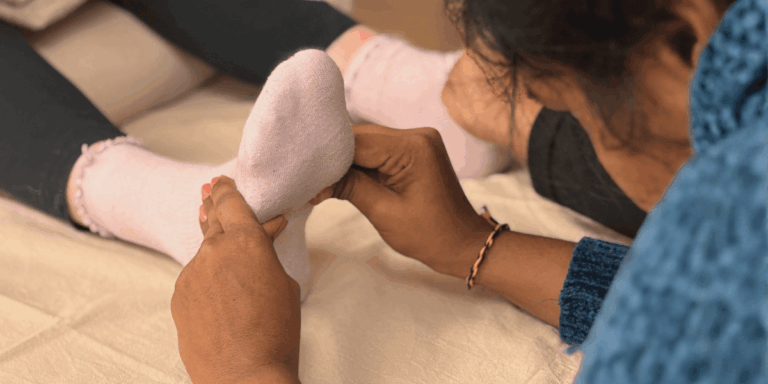
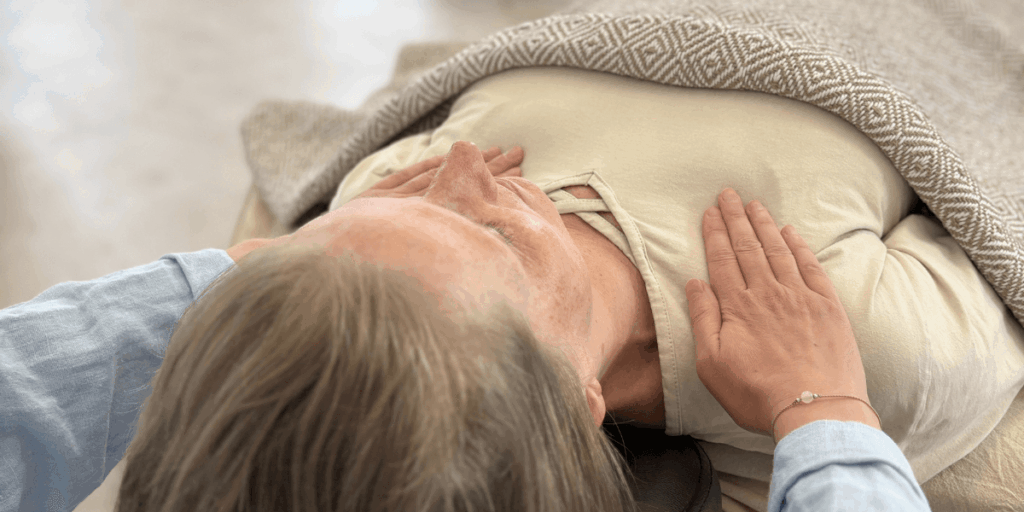
Touch is an incredibly powerful way to support recovery. When we receive gentle, accepting touch, the body releases oxytocin – the hormone of connection and safety. Oxytocin, in turn, helps activate the parasympathetic nervous system – the part of the nervous system responsible for calming the body and triggering recovery processes.
Touch may be the exact impulse the body and mind needs to settle when your own tools are no longer enough. It grounds you, increases your sense of safety, and reminds your body what it feels like to be relaxed and in balance. And when the body remembers what calmness feels like, it becomes easier to return to that state again.
Research supporting the benefits of touch
Studies show that touch can significantly reduce stress. A recent large-scale meta-analysis examined over 200 studies from around the world that investigated the health benefits of touch. This systematic review found that touch lowers levels of the stress hormone cortisol and activates the parasympathetic nervous system – a key component in the body’s recovery process. This makes touch a particularly effective way to calm the body, especially when other methods are no longer enough.
Everyone deserves accepting touch
Unfortunately, not all touch is calming – or even safe – and for some, past experiences may make touch difficult. Nevertheless, it’s essential that everyone has the opportunity to experience safe, accepting touch, whether it comes from a loved one or a trained professional. Supportive, trusting relationships in which we feel safe are invaluable – but we don’t always have those kinds of relationships in our lives.
That’s why it’s so meaningful to have the option to seek treatment or receive help through touch, especially when our own coping mechanisms no longer are enough. Touch can help the body remember how to calm down and support us in recovering from the burdens of daily life.