Recovery Is Not About Willpower: Understanding Nervous System Regulation
Many of us know this situation: from the outside, everything looks fine. You sleep “enough”, you eat fairly well, and you try to take care of yourself. And still, you don’t feel okay. You feel tired and irritable. Your body feels tense and your mind stays on high alert. Or the opposite: heavy, withdrawn, and numb.
At this point, it’s easy to start thinking that the problem is you. That you should try harder, be more disciplined, and make even better choices.
But in reality, it is often not about willpower at all. It is about the state of your nervous system.
Recovery is a nervous system state
Recovery can feel like something you should be able to choose. As if it were something you can “turn on” the same way you complete tasks during the day. But the nervous system doesn’t work like that.
Your nervous system constantly evaluates whether your environment is safe or threatening. Based on that assessment, it guides your body either toward action or toward recovery. When the nervous system feels safe, the body can settle. Breathing becomes deeper, heart rate slows down, and recovery begins.
But when the nervous system is in an alarm state, it cannot simply “let go”, even if your rational mind says that now would be a good time to rest. This is why rest alone is not always enough. If your nervous system does not feel safe, it will not recover.
Recovery begins with safety
Your nervous system is constantly adjusting your state, moving between activation and recovery. In a stress state, the body stays on high alert: sleep becomes lighter, breathing changes, and the body remains ready to respond. In other cases, the nervous system may shift into a more collapsed or numb state, making you feel exhausted or disconnected. These are not personality traits. They are nervous system states.
And because the nervous system is built to protect you, it can learn that constant readiness is the new normal. It may stay guarded even when there is no immediate danger.
Modern life gives the nervous system many reasons to stay activated: prolonged stress, constant hurry, high expectations, uncertainty about the future, and the feeling that you are never fully “done”. And even past experiences that were never processed can keep the nervous system on alert. The body remembers, even when the mind has moved on.
That is why the obstacle to recovery is not always in your calendar. Sometimes it is in the nervous system’s internal state.
The nervous system does not calm down by force. It calms down when it receives enough signals of safety. Safety is a bodily experience, not just a thought. Rhythm, predictability, and sometimes external support can help the nervous system shift toward calm. Not everything has to be done alone. That is why nervous system regulation can also be supported through touch-based treatment, through the body.
Touch and nervous system regulation
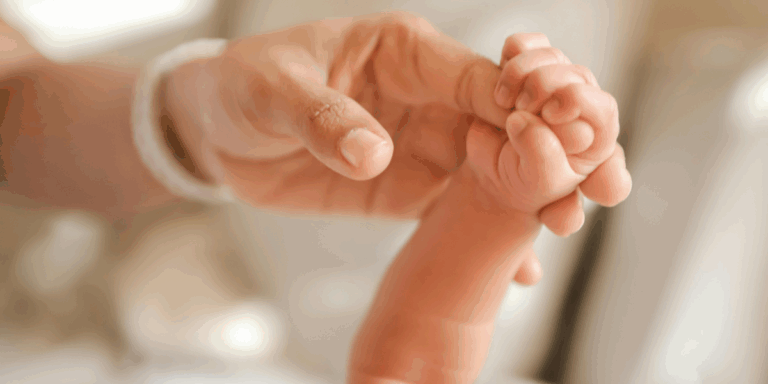
Touch is one of the most basic ways humans communicate safety. We are wired for connection.
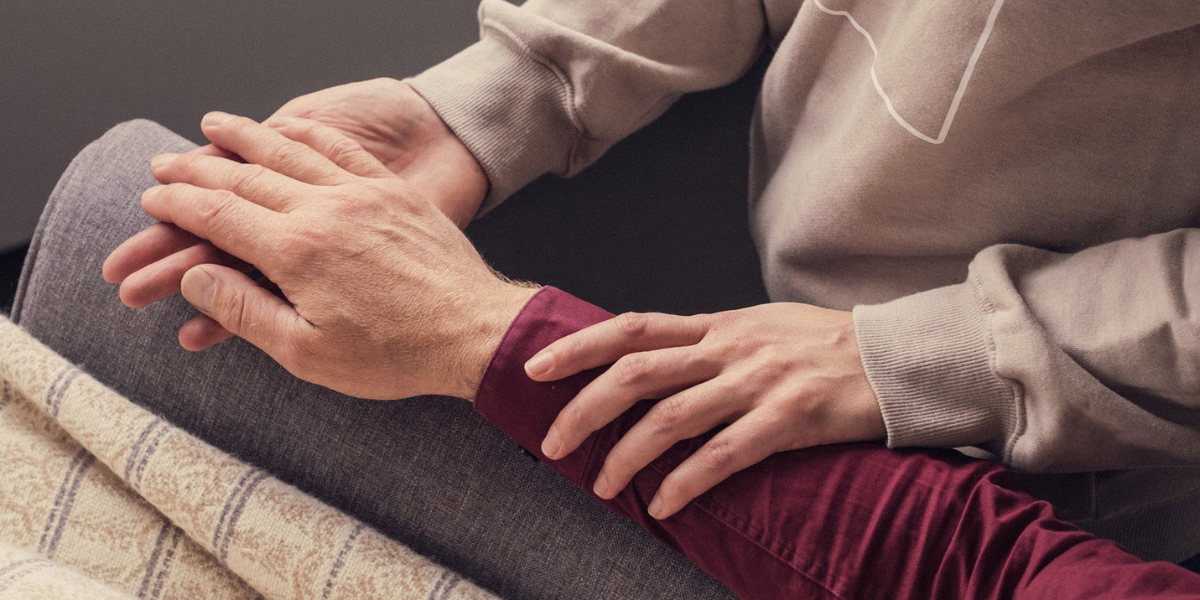
Our bodies and nervous systems mirror what we sense in others, and they influence each other. Often, we settle more easily in safe interaction than when we are alone. This is sometimes called co-regulation.
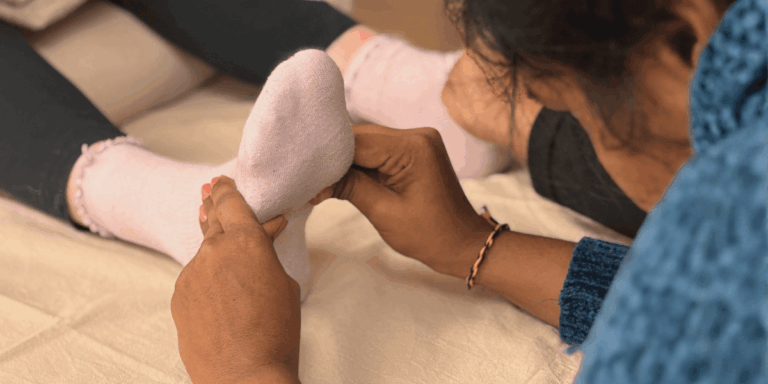
Safe touch helps the nervous system sense that it is safe: right now, there is no need to protect yourself. It can help the body shift into calm, without the person needing to “make it happen” mentally.
But touch is not automatically calming. If the nervous system is already in a strong defensive state, touch can feel too intense or even wrong. That is why the key is not to do more, but to listen to the body’s response and adjust accordingly.
How AUVO supports nervous system regulation
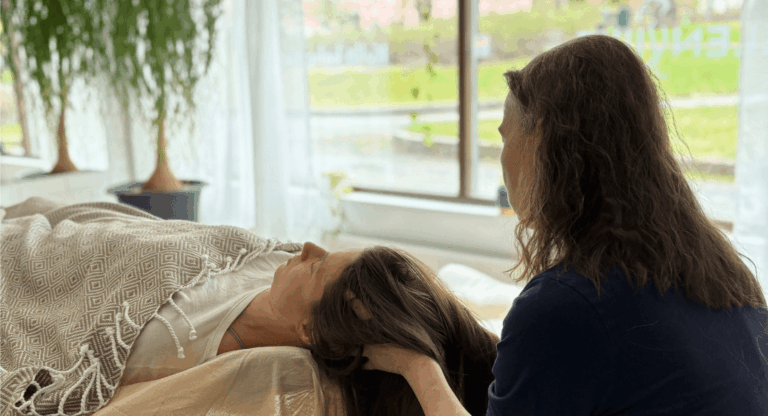
AUVO treatment is based on the idea that recovery does not happen through willpower, but through the state of the nervous system. In an AUVO treatment, the goal is not to “fix” a person. Instead, the treatment creates conditions where the nervous system can begin to regulate itself. A central element is strengthening the experience of safety in the body.
AUVO is not based on one theory or one model. It is grounded in multiple perspectives and long-term practical experience of how touch and presence affect the whole body-mind system.
When the nervous system begins to settle, many people notice clear changes: breathing deepens, the body softens, and the mind becomes quieter. Tension releases and exhaustion may shift into a sense of healthy tiredness. This is often a sign that the nervous system is moving toward a recovery state.
Recovery is not a project
Many people treat recovery like something they need to do correctly. But recovery is not a performance. It is a state that emerges when the nervous system has enough safety.
If you are not recovering, it does not mean you have failed. It means your nervous system does not yet feel safe enough to soften.
The good news is that the nervous system is adaptable. It can learn to calm down again when it receives the right kind of support. When the body experiences safety, it begins to do what it does best: recover.
Sometimes the nervous system first needs the experience that it is truly okay to settle. That experience leaves a trace in the body. And once the body remembers the direction, it becomes easier to return to it in everyday life.
If you want to explore how AUVO supports nervous system regulation in practice, you can read more about the AUVO method or book a session with an AUVO practitioner.Recovery isn’t something you can force with willpower. It begins when your nervous system receives enough signals of safety. This article explains why rest alone doesn’t always help, how touch can support regulation, and how AUVO treatment helps the body shift toward calm and recovery.